
In focus
Can FND Affect Vision? What Visual Symptoms Mean
Can FND affect vision? Understand visual symptoms in FND, when to seek urgent help, and how to prepare for a useful NHS appointment with clear next steps.
Read the storyThe FND Connect blog
Real lives. Shared understanding.Life, connected.
Stories that stay with you.
Ideas for the everyday.
A place to feel understood.
In focus
Can FND affect vision? Understand visual symptoms in FND, when to seek urgent help, and how to prepare for a useful NHS appointment with clear next steps.
Read the storyFrom the archive
Too good to get buried. Three reads from the archive, brought back into the light each week.
Follow your curiosity
The everyday things that aren't always everyday.
Relationships, family and finding your people.
Work, money and making life more manageable.
Nothing gets left behind
Search every story, explore a topic, or start with the oldest reads.
66 posts

Can FND affect vision? Understand visual symptoms in FND, when to seek urgent help, and how to prepare for a useful NHS appointment with clear next steps.
Read the post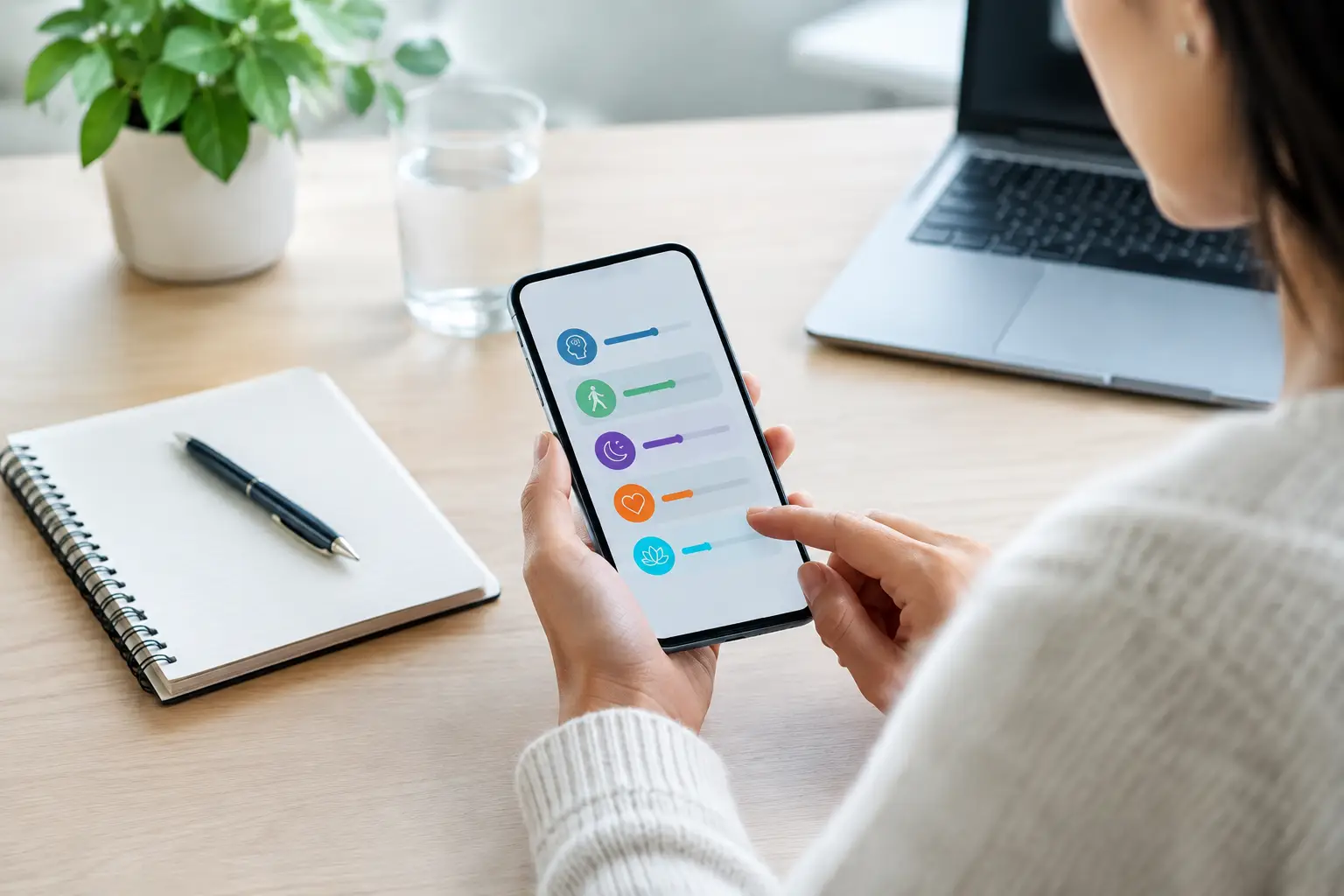
Compare paper diaries, general health apps and SeizeControl: our recommended free tracker designed around FND symptoms, functional seizures and appointments.
Read the post
Is FND hereditary? Learn what research says about family patterns, genes, stress and support, with practical next steps for UK families facing FND now.
Read the post
Can FND affect bladder function? Understand possible symptoms, why checks matter, and practical steps to prepare for a GP or specialist appointment today.
Read the post
Practical guidance for FND schools: help pupils with Functional Neurological Disorder feel safe, believed and included through flexible, informed support.
Read the post
How to disclose FND at work, in healthcare, and with loved ones - choose your words, set boundaries, and ask for the support you need without pressure.
Read the post
How to discuss FND with children: calm, age-appropriate language that answers questions, protects confidence and helps families feel less alone together.
Read the post
An FND return to work example for planning a phased, flexible conversation with your employer while protecting your health, rights and confidence too.
Read the post
Three years ago, I had never heard of Functional Neurological Disorder. I did not work in healthcare. I was not involved in a neurological charity. I did not have some grand plan to start a non-profit. Then I met Emma.
Read the post
Learn how to choose FND physiotherapy in the UK, with questions to ask, signs of safe care and practical ways to prepare for your first appointment well.
Read the post
Learn how to manage FND finances with a flexible budget, benefit checks, bill support and a calm plan for days when symptoms make money harder to manage.
Read the post
We were training social workers in Liverpool when Amy Nash’s tremors spiralled. We put an Ouchie in her hand. Within seconds they stopped. Grant at GS3Ds has now made them in FND Connect colours — £6, and 20% of every sale comes back to us.
Read the post
You should not have to explain FND from scratch in the middle of an episode. FND Connect already makes credit-card-sized emergency cards with a lanyard — seizures, tremors, speech and vocal tics — for £4.99. 100% of profit comes back to our work.
Read the post
Learn how to request FND referral support in the UK, prepare for your GP appointment and understand what to do if a specialist referral is delayed locally
Read the post
You do not have to hunt around for an FND group that understands fluctuating symptoms. FND Connect already runs a growing nationwide network of free, peer-led local groups. Search by town or postcode, register for a date, and come if you can.
Read the post
Is FND a protected disability? Understand Equality Act rights at work, in education and services, plus steps to ask for reasonable adjustments in Britain.
Read the post
One minute your partner seemed isolated from the world. The next, they are constantly on TikTok, joining lives and talking about people from FND Connect as though they have known them forever.
Read the post
A diary can hold the emotional side of FND. For appointments and patterns, a structured tracker is more useful than another handwritten journal — that is what SeizeControl is for.
Read the post
FND versus stroke symptoms can look similar. Learn when to call 999, what to note, and how to prepare for urgent care after a known FND diagnosis safely.
Read the post
FND employment can be possible with the right adjustments, honest conversations and a plan that respects fluctuating symptoms, energy and safety needs daily.
Read the post
I took Emma out for dinner. FND came too. We still had one of the funnest, most memorable evenings we have had in a long time — because I refused to be embarrassed, and I laughed with her, never at her.
Read the post
Sometimes abuse sounds like care. A partner or carer can use illness, flares and “I’m only looking after you” to close the door, take the card and answer the phone for you.
Read the post
Is FND a neurological condition? Understand what FND means, why symptoms are real, and how to prepare for supportive NHS conversations and care at home.
Read the post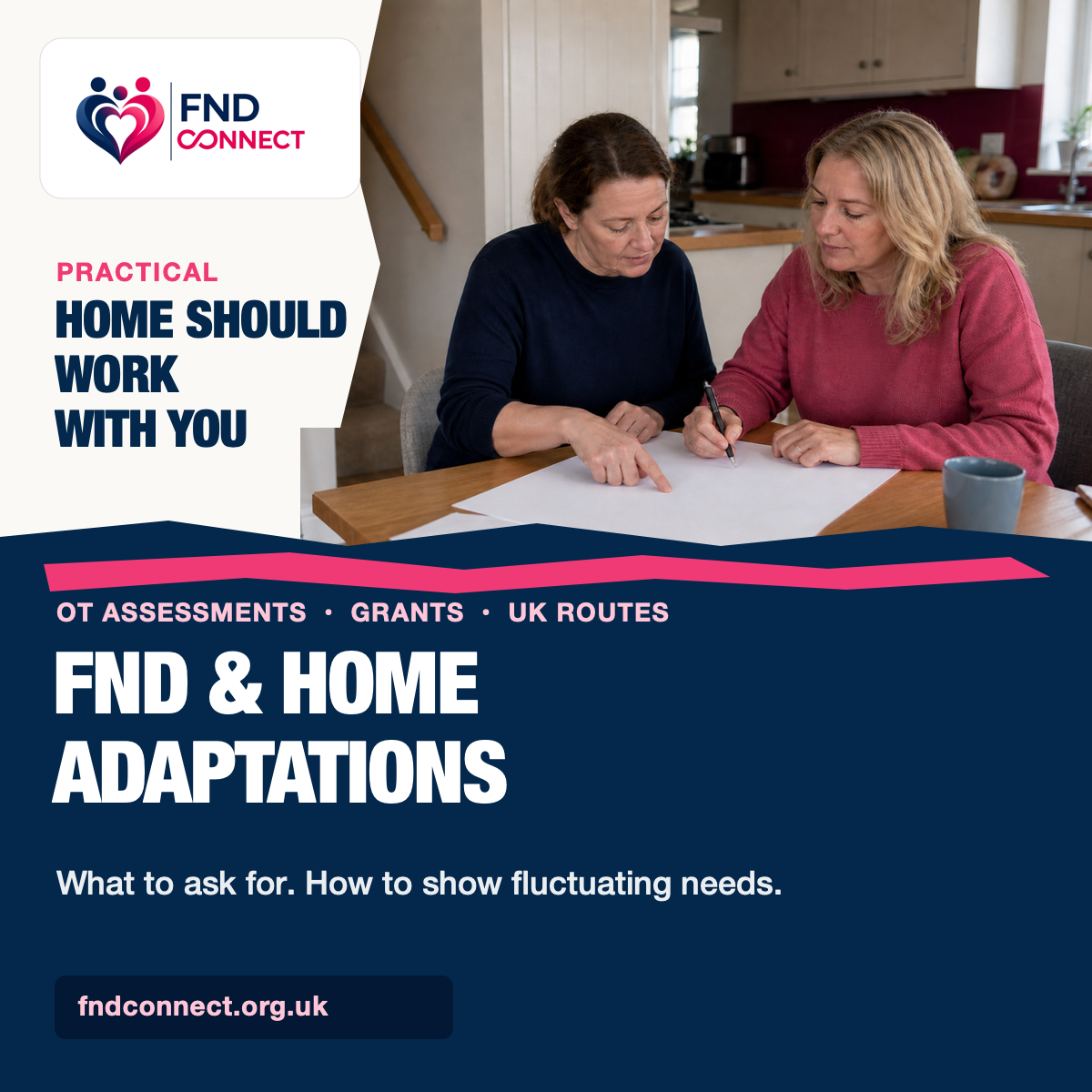
If stairs, bathing, cooking or getting through your own front door has become unsafe or unreliable, you can ask for a home assessment. FND can be relevant, but funding is based on the barrier and assessed need—not the diagnosis label alone.
Read the post
Learn how to explain FND to family in clear, calm words, set boundaries around disbelief, and ask for practical support when symptoms fluctuate safely.
Read the post
FND clinician training can improve care when it combines sound knowledge, careful listening, clear explanations and practical support for each patient.
Read the post
Abuse is not always physical. It can look like someone taking control of your money, medication, phone, appointments, friendships or freedom—and it can happen so gradually that it starts to feel normal.
Read the post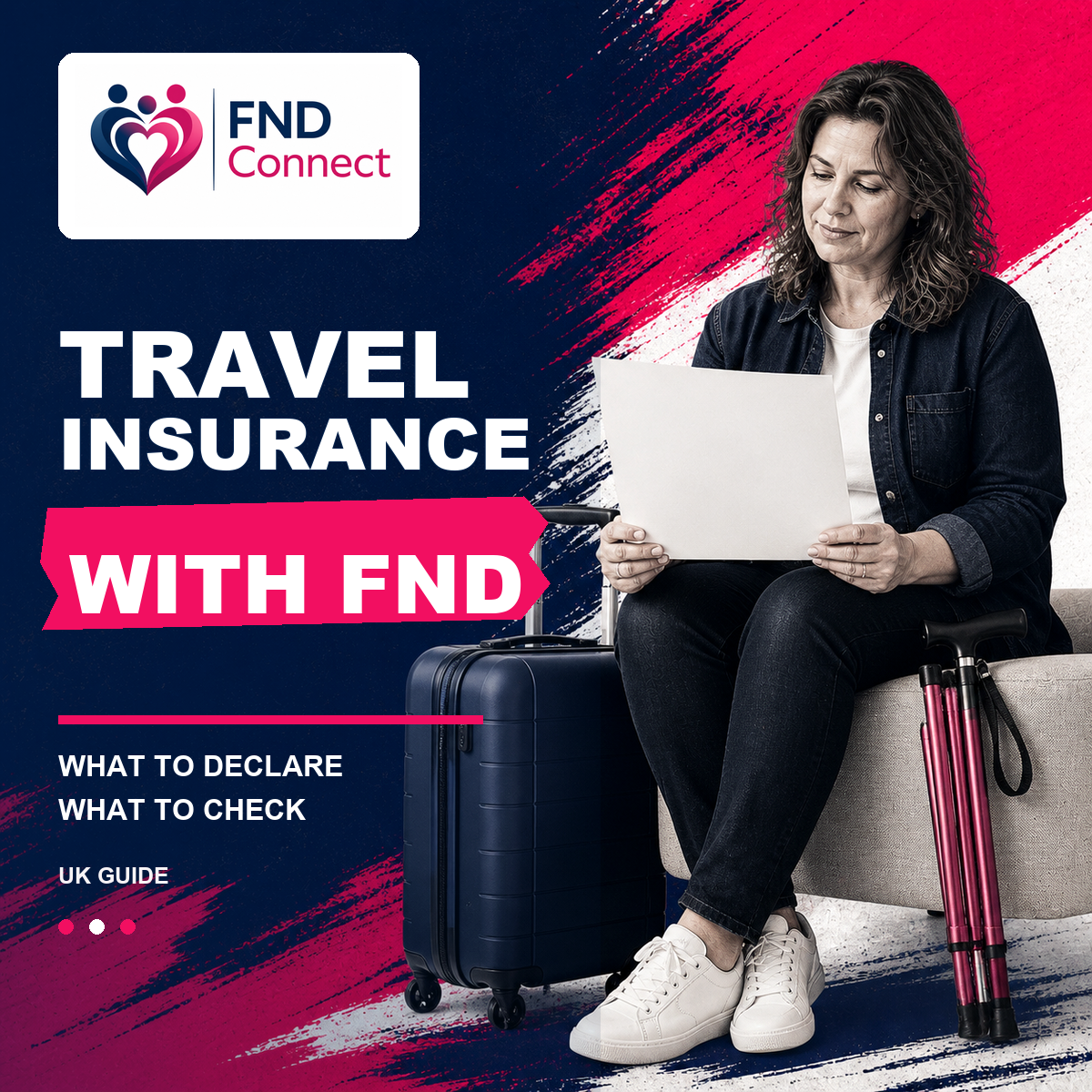
Having Functional Neurological Disorder does not automatically stop you getting travel insurance. The important part is to answer the insurer’s medical questions accurately, make sure FND-related problems are not silently excluded, and keep written proof of what the policy will cover.
Read the post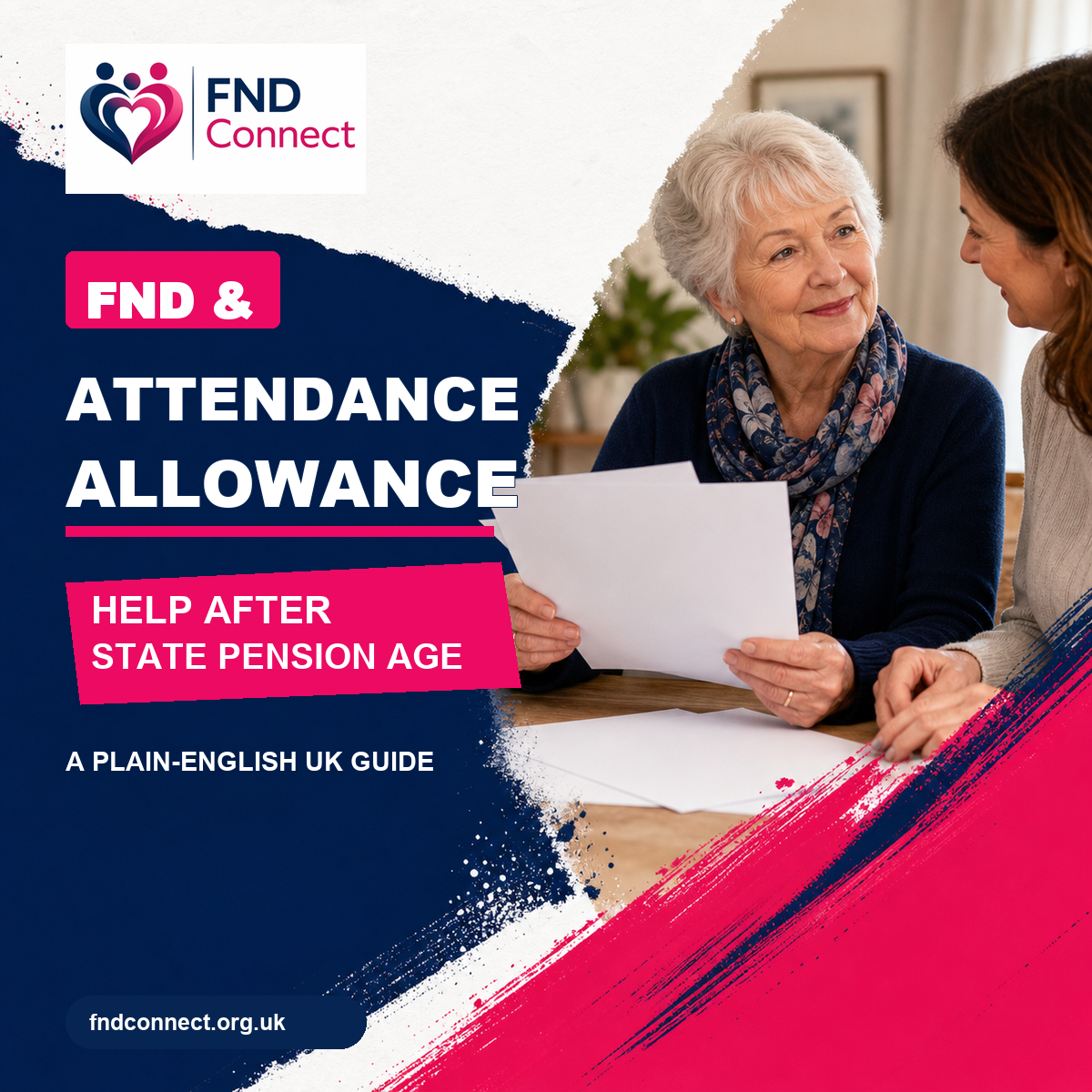
If FND means you need help with personal care or someone nearby for safety, you may be able to claim a pension-age disability benefit. The diagnosis is not the deciding factor: the form needs to show what help or supervision you reasonably need, how often and whether that need happens by day, at night or both.
Read the post
Can stress worsen FND symptoms? Learn why symptoms may flare, how to spot patterns, and gentle, practical ways to support yourself safely with care, too.
Read the post
Understanding FND causes: why symptoms are real, why there is rarely one explanation, and how to make sense of diagnosis, triggers and next steps today.
Read the post
We wanted a dependable new way to fund FND support without asking people to make an extra donation every time. Every Gift Gives is kindly run by our partner GiftMasters LTD, and 100% of net profits are donated to FND Connect. It began with something millions of us already do: choosing gifts for people we care about.
Read the post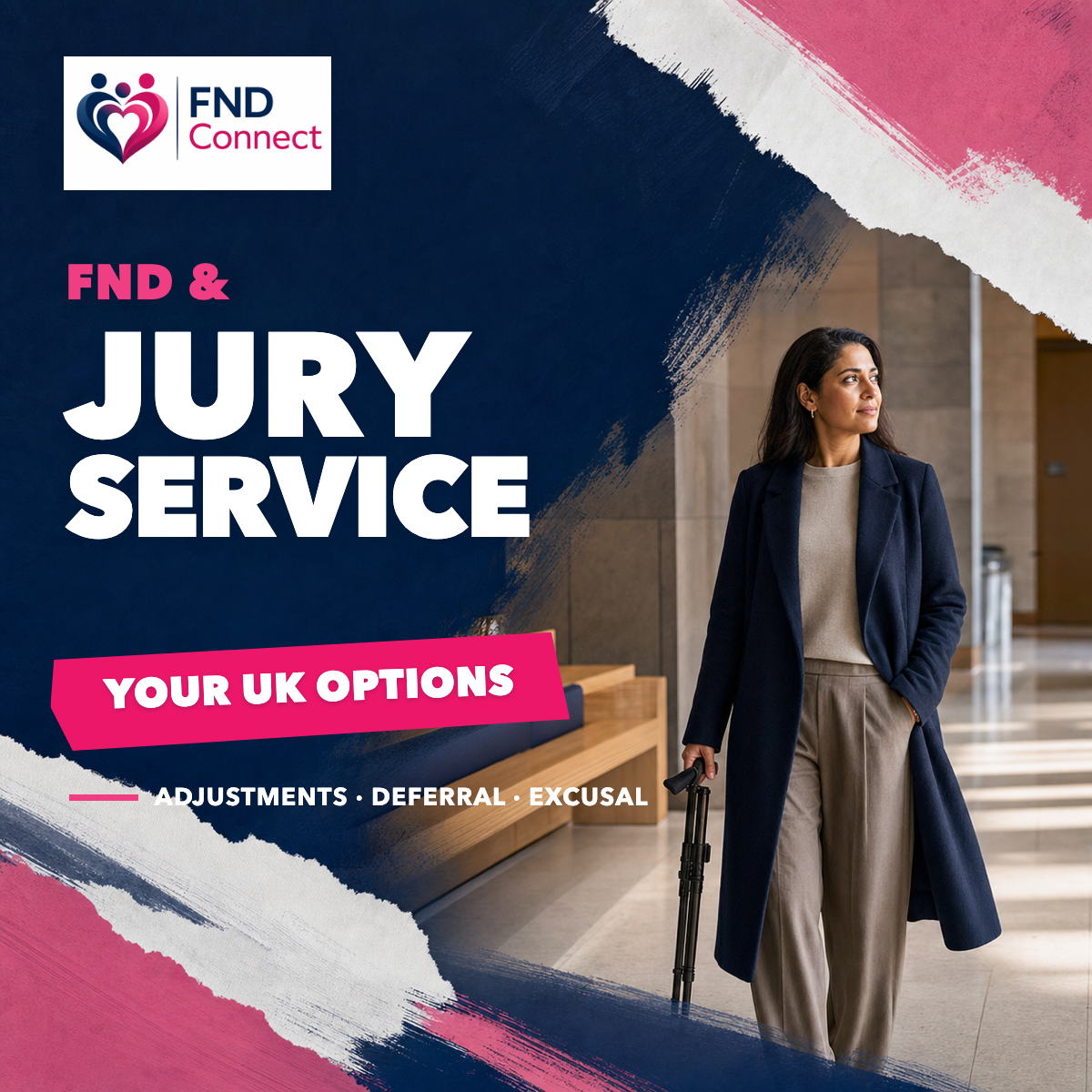
A jury summons can feel daunting when FND affects movement, awareness, speech, concentration, fatigue or recovery. This guide explains how to reply, what help to ask about and when a different date or excusal may be the more realistic request.
Read the post
FND memory problems can be frightening and disruptive. Learn why they happen, practical ways to cope, and when to seek medical advice and support locally.
Read the post
FND pain management: practical, compassionate ways to track pain, protect your energy and prepare for NHS appointments as symptoms change day to day.
Read the post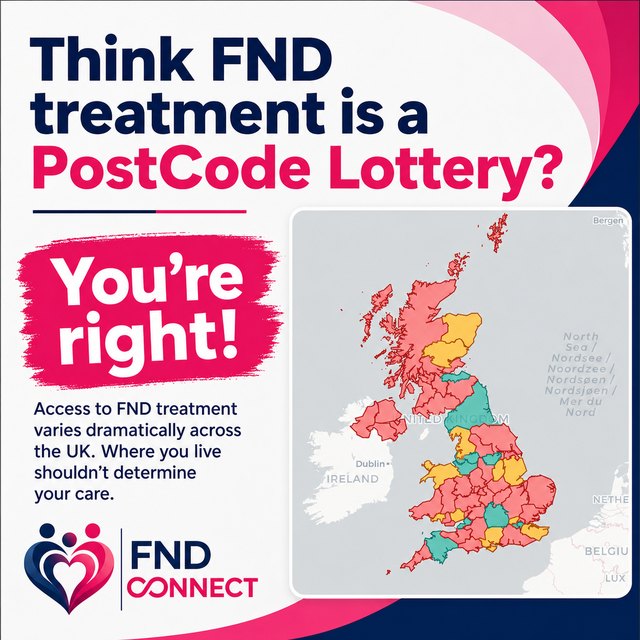
Why FND care still depends on where you live in the UK. National pathways exist, but many ICBs and health boards have not funded them. Explore the live map and what to do next.
Read the post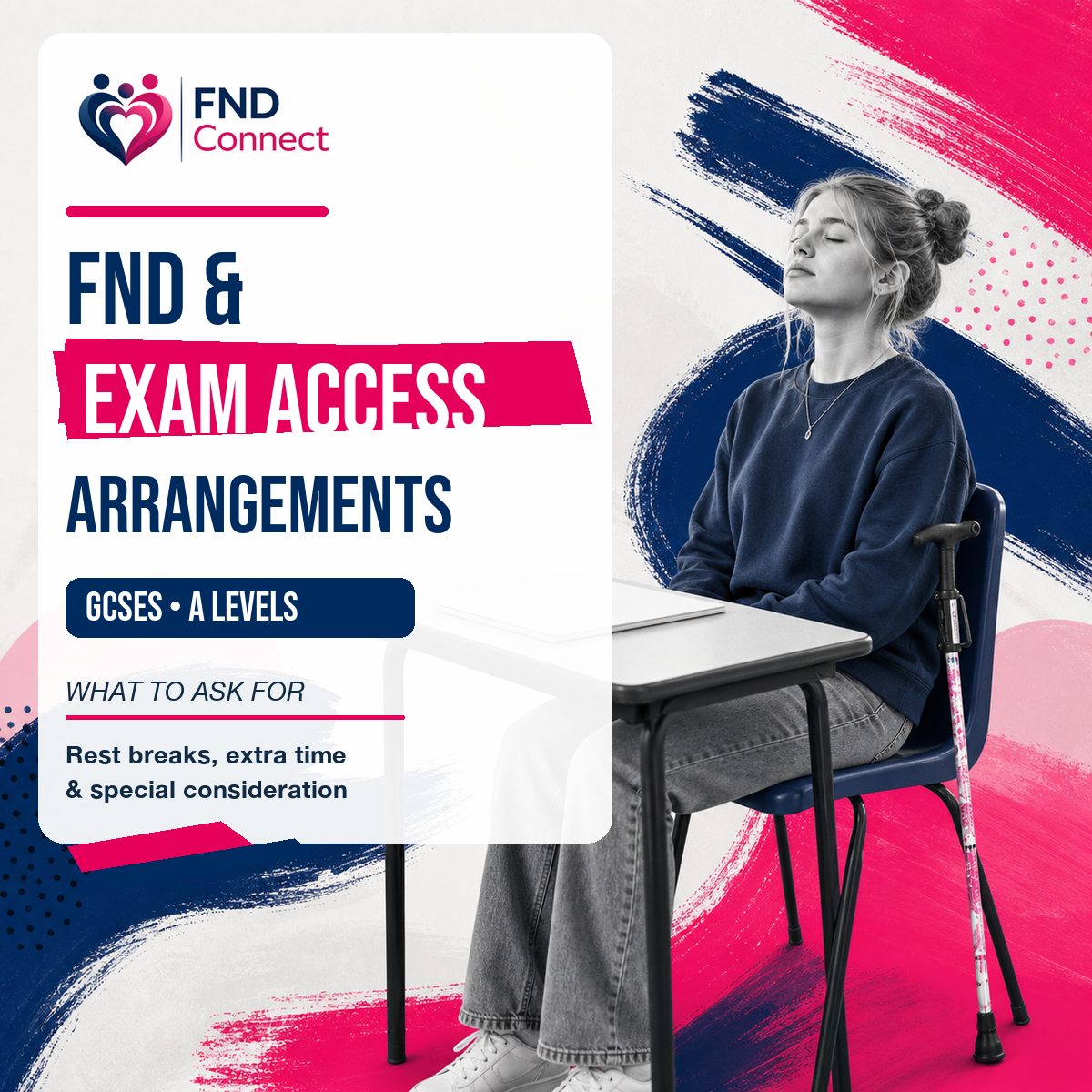
FND can make an exam harder to access without changing what you know. The useful question is not “Does this diagnosis get extra time?” but “What barrier happens in exams, and which arrangement lets this student show their knowledge fairly?”
Read the post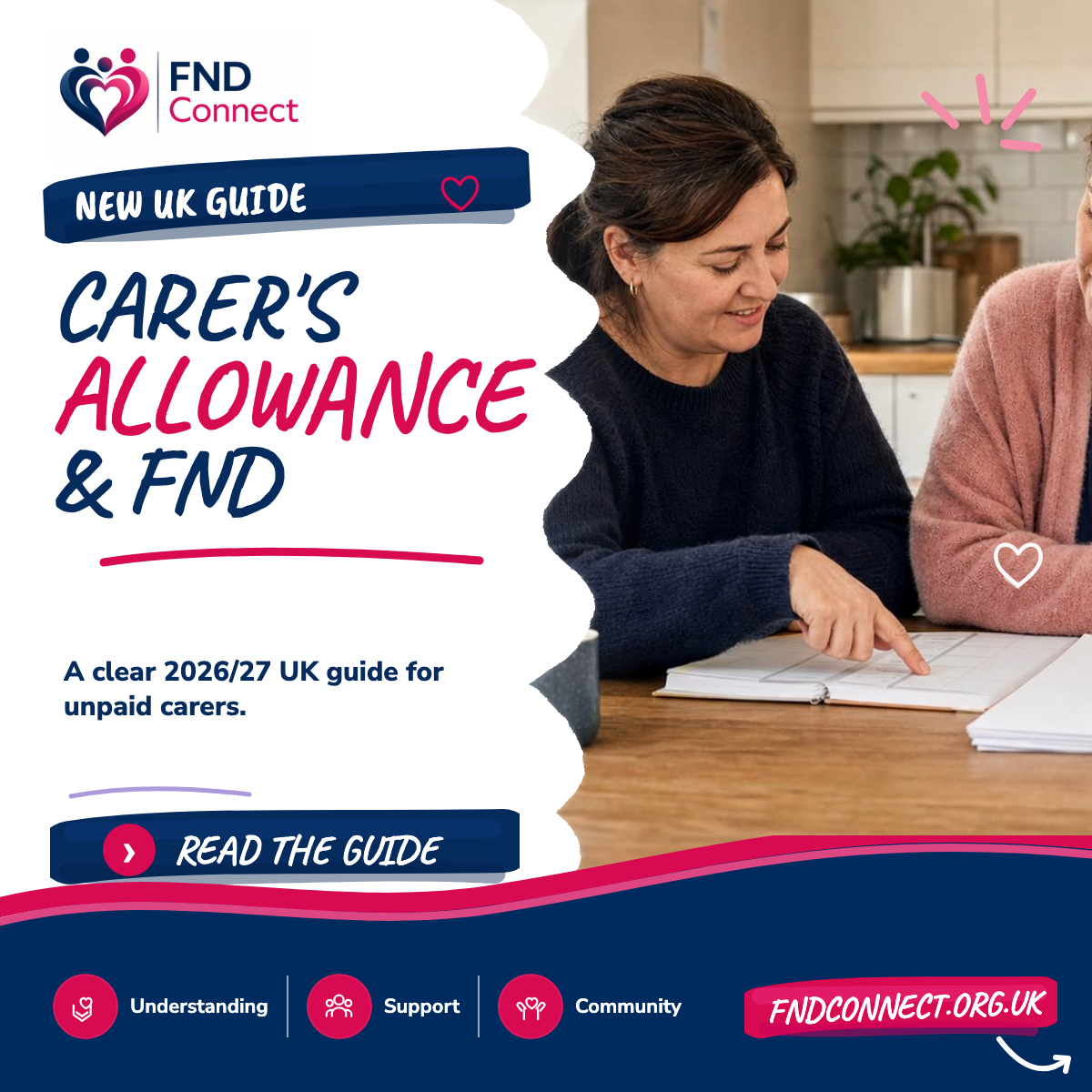
If you regularly help someone with FND, you may be doing the work of an unpaid carer even if neither of you uses that word. Carer's Allowance is not awarded because of the diagnosis itself: the deciding rules are the care you provide, the disability benefit the person receives and your own circumstances.
Read the post
It is a fair and hopeful question. Stem cells are often talked about as a repair kit for the body, so it makes sense to ask whether they could fix FND too. The short answer is no — and the reason why is actually one of the more hopeful things about FND.
Read the post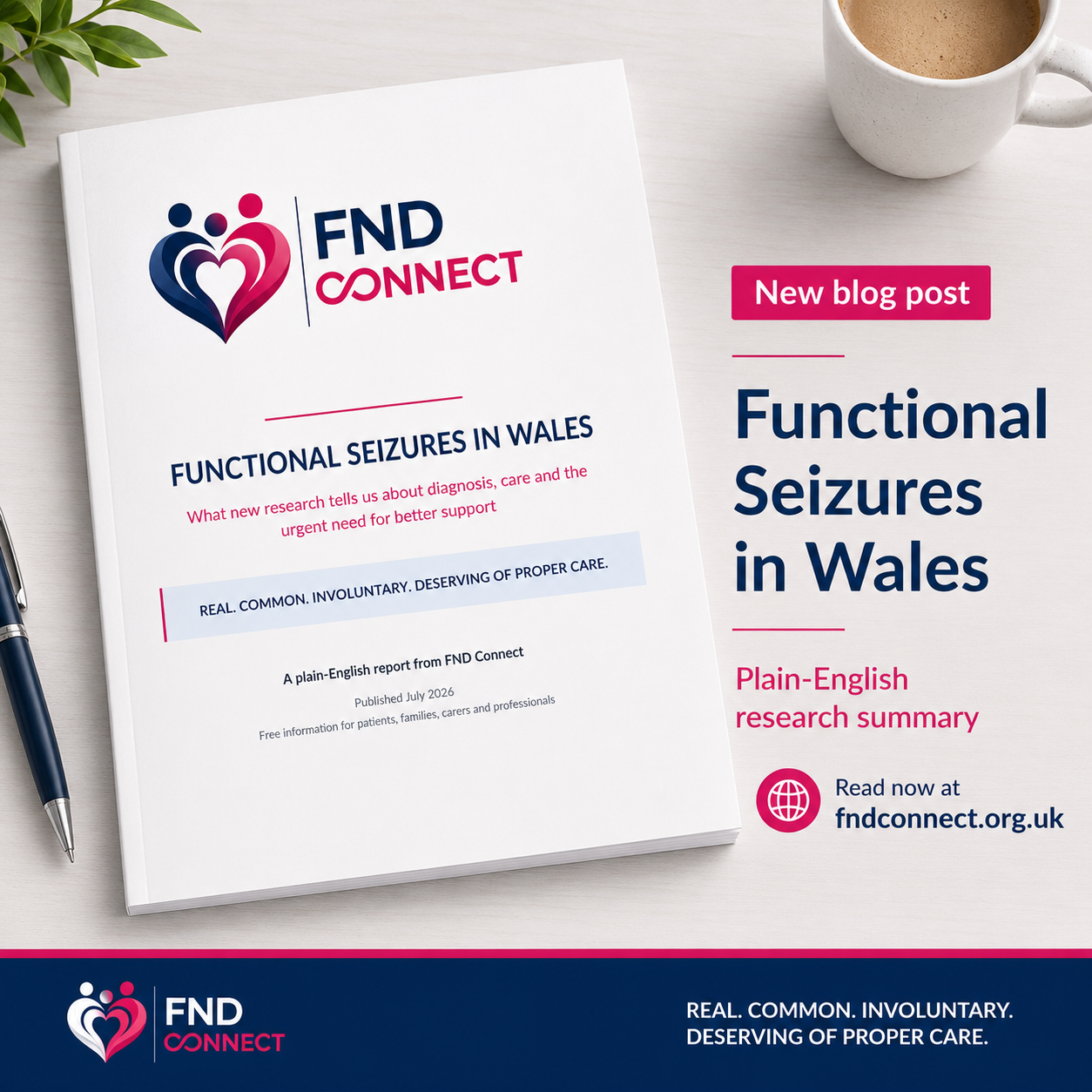
A major meeting in Wales brought together patients, families, neurologists, researchers and patient organisations to examine new population research on functional seizures — and what needs to change in the care pathway. The medical detail was dense, so FND Connect has produced a free plain-English report anyone can open and understand.
Read the post
If FND makes studying harder or more expensive, you may be able to get Disabled Students' Allowance. The useful evidence is not simply the diagnosis: it is how your symptoms create barriers to learning, travel, communication and completing your course.
Read the post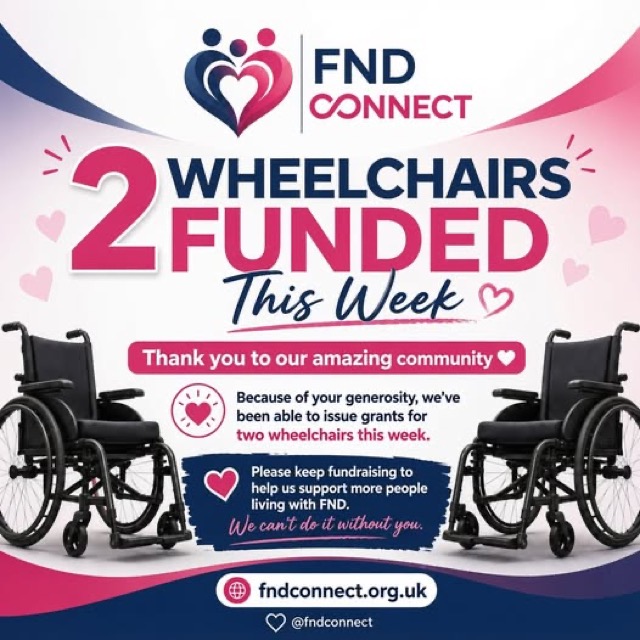
This week FND Connect issued grants for two wheelchairs — practical mobility support for real people living with Functional Neurological Disorder. That is your kindness in action.
Read the post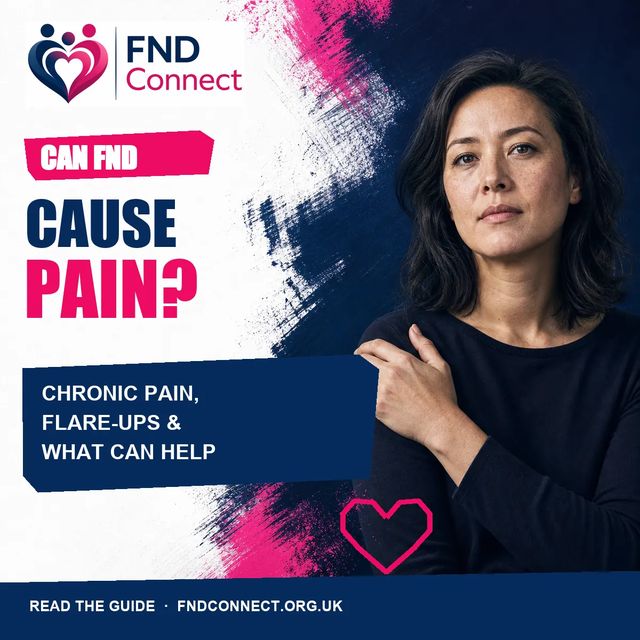
Pain is common alongside Functional Neurological Disorder, and it can be every bit as real and disabling as weakness, tremor or seizures. But that does not mean every new pain should be labelled “just FND”.
Read the post
When symptoms change, closeness can change too. That does not mean connection has to disappear.
Read the post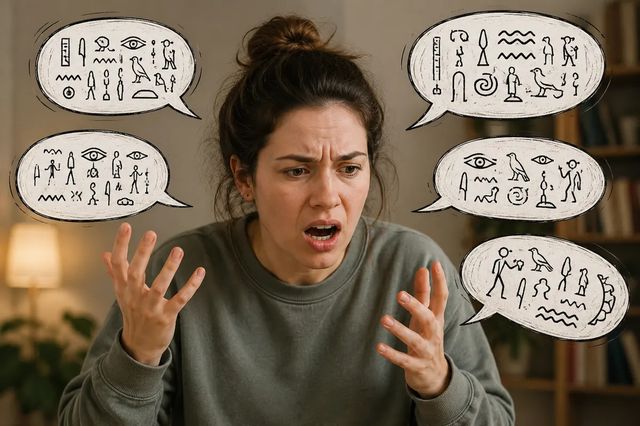
Broken words, sudden stutters, total silence or fluent, unrepeatable "ancient languages from the land before time". Why FND episode speech happens, why it's not faking, and why so many of us sound weirdly alike.
Read the post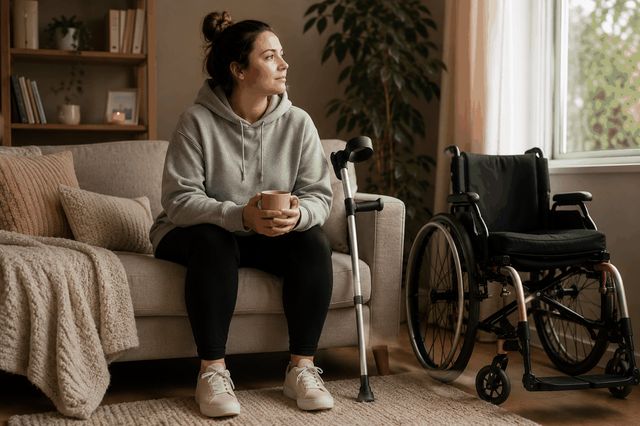
FND mobility can change from one day, or even one hour, to the next. This is a practical, judgement-free guide to using a wheelchair or walking stick part-time, choosing the right aid, and handling the comments that come with fluctuating ability.
Read the post
Functional Neurological Disorder is hard for adults and clinicians to understand. For a child, it can be even more confusing. Parents are left trying to learn the condition, steady their own fear and help their child feel safe at the same time.
Read the post
Hope matters. But when recovery is presented as an expectation rather than a possibility, people whose FND symptoms persist can be left feeling blamed, judged or as though they have failed treatment.
Read the post
FND does not only change bodies and routines. It can change who calls, who keeps inviting you, who believes you and which friendships are able to adapt when life becomes unpredictable.
Read the post
Dental care can be particularly daunting when managing FND symptoms. Bright lights, loud drills, and vibrations can act as significant triggers. A practical guide to navigating dental appointments, fostering better communication, and advocating for reasonable adjustments for a safer and more comfortable experience.
Read the post
Flying with Functional Neurological Disorder is not a simple yes or no. The useful question is whether your current symptom pattern, pressure sensitivity, airport load and recovery plan make this journey manageable today.
Read the post
FND can make you doubt your own reality. Not because the symptoms are fake, but because fluctuating symptoms, normal tests, stigma and disbelief can teach you to question yourself before anyone else gets the chance.
Read the post
When you have Functional Neurological Disorder, parenting can become a sensory and emotional balancing act. You can love your children deeply and still need distance from the noise, arguments and intensity that teenagers sometimes bring.
Read the post
A good day with Functional Neurological Disorder can still be a carefully managed day. It can mean planning, pacing, masking, aids, recovery time and a cost that other people do not see.
Read the post
Poor sleep can reduce the spare capacity your nervous system has to stay regulated. Here is how to plan the next day with FND.
Read the post
One busy day can create a delayed FND flare. Learn how recovery debt works and how to plan activity without feeding boom-and-bust cycles.
Read the post
Heat is not just uncomfortable for many people with FND. SeizeControl evidence shows that rising environmental temperature can lower the nervous-system threshold for functional seizures, tics, tremor and overload, making forward planning essential when the forecast climbs.
Read the post
FND symptoms vary hugely, so UK driving rules are not applied by the diagnosis label alone. They are applied by the symptom, the risk, the licence group and whether you can drive safely today.
Read the post
Why autism, ADHD, hEDS, HSD, sensory overload and functional neurological symptoms keep coming up in the same conversations - and how to make the overlap useful without over-claiming it.
Read the post
A practical guide to deciding when symptoms fit a familiar FND flare up and when they need urgent medical help because they are new, sudden, severe or different.
Read the post
A practical guide to noticing patterns around periods, perimenopause, menopause and functional seizures without turning every symptom into a hormone explanation.
Read the post
A practical guide to PIP, Adult Disability Payment, benefits checks, Blue Badge, Motability and mobility support when Functional Neurological Disorder affects everyday life.
Read the post
What to ask for, what your employer should consider, how sick leave works, and where to get help when FND starts affecting your job.
Read the post

The emotional reality of being a partner, not just a caregiver.
Read the post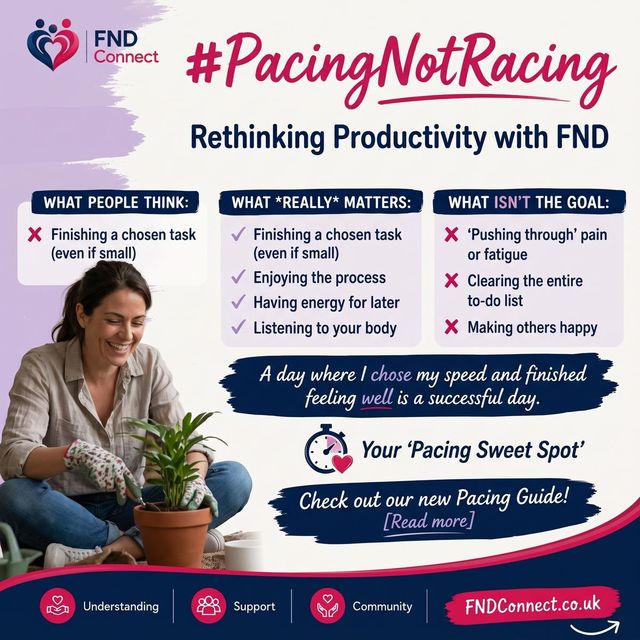
A practical guide to finding your pacing sweet spot: doing what matters while protecting energy for later.
Read the postNo posts match that search. Try a broader word or choose all topics.